News and Highlights
- [2026/09] Two papers accepted to NeurIPS 2026: Self-Rewarded Reasoning (Spotlight) and E0.
- [2026/09] Our work at ECCV 2026: FlashVLM (main conference Poster) and ActPhysCause (LoViF Workshop Oral).
- [2026/06] Joined Stanford University as a Visiting Researcher (terminal-degree requirement waived by the Dean’s Office).
- [2026/06] Hosted the 1st LoViF Challenge on Efficient VLMs at CVPR 2026; challenge report presented as Workshop Oral.
- [2026/05] Three papers accepted to ICML 2026: Failure-Driven Workflow Refinement (Spotlight), SOLAR for Offline MARL, and Great Minds Think Alike.
- [2026/03] Joined Google DeepMind as a student researcher, working with Ming-Hsuan Yang and Liangzhe Yuan.
- [2026/02] Five papers accepted to CVPR 2026, including two Highlights: HybridToken-VLM and Vocabulary Scaling Law.
- [2026/01] Two papers accepted to ICLR 2026: Trading Visual Uncertainties and CoMem.
- [2026] Awarded the Snap Global AI Future Leader Scholarship ($30,000).
- [2025/12] Started a research internship at Nanyang Technological University with Kwok-Yan Lam and Yongsen Zheng.
- [2025/11] Three papers accepted to AAAI 2026, including RaCoT (Oral).
- [2025/09] Four papers accepted to NeurIPS 2025: GAM-Agent, MAT-Agent, Tri-MARF, and CF-VLM.
- [2025/08] Two papers accepted to EMNLP 2025, including DrDiff (Oral).
- [2025] Selected for the Snap Research Fellowship (top 10 globally, $30,000).
- [2025/05] KABB accepted to ICML 2025.
- [2025/03] Joined Meta AI as a research intern, contributing to the Llama 4 project.
Research
My research focuses on reliable AI agents and multimodal learning. My current interests include:
- Agents & Reasoning: Multi-agent coordination, uncertainty-aware reasoning, and learning from failures. [Markets of Minds] [CE-Graph] [KABB] [GAM-Agent]
- VLM: Efficient vision-language models, counterfactual adaptation, and video understanding. [HybridToken-VLM] [CF-VLM] [Video Encoders]
- Robotics: Vision-language-action models and predictive world models for robotic manipulation. [E0] [E0.5] [ActPhysCause]
- AI for Life Sciences: AI agents for biological research and scientific discovery.
Selected Work
Selected highlights are shown below. All publications can also be found on my Google Scholar page.
Self-Rewarded Multimodal Coherent Reasoning Across Diverse Visual Domains
NeurIPS 2026 Spotlight
A label-free reinforcement learning framework that rewards multimodal LLM reasoning chains using five self-derived coherence and grounding signals, improving accuracy and step consistency without a critic.
Failure-Driven Workflow Refinement
ICML 2026 Spotlight
Reframes LLM workflow optimization as reducing a workflow's expected failure mass: CE-Graph clusters counterexamples into failure modes and applies verified graph edits that shrink them.
Hybrid Token Compression for Vision-Language Models
CVPR 2026 Highlight
Compresses a VLM's hundreds of visual tokens into a single token by fusing continuous patch features with a few discrete semantic anchor tokens, retaining most benchmark performance.
CF-VLM: CounterFactual Vision-Language Fine-tuning
Fine-tunes vision-language models with counterfactual image-text pairs so they stay aligned, distinguish factual from counterfactual scenes, and respond to minimal causal edits, improving compositional reasoning.
KABB: Knowledge-Aware Bayesian Bandits for Dynamic Expert Coordination
KABB selects which expert agents to use for a task via Thompson Sampling guided by a semantic knowledge-distance model, with dual adaptation that keeps expert representations current.
GAM-Agent: Game-Theoretic and Uncertainty-Aware Collaboration for Complex Visual Reasoning
Base agents handle visual sub-tasks while a critic agent checks consistency; modeled as a non-zero-sum game, they exchange claims and uncertainties and debate when they disagree.
Video Encoders Built on Image Representations
arXiv 2026 (Preprint)
[Paper] [Code]
Builds a compact video encoder on a frozen image encoder by selecting a fixed token budget across frames and adding temporal context only to selected tokens.
E0.5: From Reconstructive to Future-Predictive 3D Foundations for Robotic World-Action Modeling
arXiv 2026 (Preprint)
Builds a robot world-action model on a 3D foundation backbone that jointly predicts actions and future 3D geometry, improving manipulation success in simulation and on real robots.
The LoViF 2026 ActPhysCause Challenge: A Baseline Report on Action-Conditioned Video World Models
ECCV 2026 Workshop Oral
Introduces the ActPhysCause Challenge on action-conditioned video world models, where models generate physically plausible, causally consistent future manipulation videos from a first frame and an instruction, and reports baseline results under the RCS100 metric.
Long-Horizon Agency Belongs in the Harness, Not the Context Window Only
NeurIPS 2026 (Position Paper Track)
[Paper] [Code] [Conference]
Argues that long-horizon agents need durable state in their surrounding infrastructure, including plans, checkpoints, permissions, and recovery, rather than relying only on a larger context window.
FlashVLM: Text-Guided Visual Token Selection for Large Multimodal Models
ECCV 2026 (Poster)
[Paper] [Code] [Conference]
Selects visual tokens using the text query, balancing relevance with visual saliency and background diversity for more efficient multimodal inference.
SOLAR for Offline MARL: Plateau-Triggered Potential Shaping under World-Model Uncertainty
[Paper] [Code]
For sparse-reward offline multi-agent RL, SOLAR uses a learned world model to detect learning plateaus, then adds uncertainty-throttled potential-based reward shaping that preserves the task optimum.
Great Minds Think Alike: Contextual Tacit Communication for Decentralized LLM-Agent Cooperation
[Paper] [Code]
Coordinates decentralized embodied agents without explicit runtime messaging by retrieving contextual cooperation rules from a Tacit Rule Memory. The rules align local plans with team-level objectives and help agents avoid conflicting actions.
Vocabulary Scaling Law: Tuning Open-vocabulary Predictors for Their Openness
[Paper] [Code]
CVPR 2026 Highlight
Shows that an open-vocabulary classifier's robustness to new and distractor classes is bounded by its full-vocabulary performance, and fine-tunes on a submodularly chosen class subset.
Learning Dynamics of VLM Finetuning
Stabilizes preference finetuning of vision-language models by down-weighting gradients from easy negatives using a cooling weight based on the model's own log-probabilities.
PHYLOMAN: Generative Behavior Control via Fusing LLM Planning and Physics-based Control
Generates long-horizon, goal-directed human behaviors by combining LLM task planning with physics-based motion control, and introduces the GBC-100K dataset with hierarchical behavior annotations.
A Causal Marriage between VLM and IRM from Understanding to Reasoning
[Paper] [Code]
Shows CLIP's vocabulary-constrained contrastive objective is equivalent to invariant risk minimization, yielding CLIP-IRM mid-training for out-of-distribution robustness and process rewards for multimodal reasoning.
[Paper] [Code] [Challenge] [Workshop]
CVPR 2026 Workshop Oral
The report reviews the 1st LoViF challenge at CVPR 2026, in which participants predicted Amazon product ratings from images and text with lightweight VLMs, and benchmarks the accuracy-efficiency trade-off (Pearson correlation versus parameters, FLOPs and latency) across the top-performing solutions.
Why Keep Your Doubts to Yourself? Trading Visual Uncertainties in Multi-Agent Bandit Systems
Agora coordinates vision-language model agents as a decentralized market where perceptual, semantic and inferential uncertainties are traded, with a Thompson-Sampling broker steering toward cost-efficient collaboration.
CoMem: Compositional Concept-Graph Memory for Vision–Language Adaptation
[Paper] [Code]
Stores continual vision-language knowledge as a compact graph of concepts and relations, rehearsing in feature space from sampled subgraphs instead of raw images to limit forgetting.
Markets of Minds: A 51-Billion-State Economy of Intelligence
arXiv 2026 (Preprint)
[Paper] [Code]
Treats expert-model assistance across a population of agents as a constrained allocation problem, scoring each agent-service pair by expected gain minus regression risk before any expert output is observed.
RaCoT: Plug-and-play Contrastive Example Generation Mechanism for Enhanced LLM Reasoning Reliability
AAAI 2026 Oral
Before retrieval, generates a similar question with a different answer and distills their differences into a prompt that steers the LLM toward answer-determining details, improving RAG robustness.
LLM-CAS: Dynamic Neuron Perturbation for Real-Time Hallucination Correction
Treats real-time hallucination correction as hierarchical reinforcement learning, where an agent temporarily perturbs selected neurons during inference without permanently changing model weights.
Top-Down Semantic Refinement for Image Captioning
Treats image captioning as top-down planning and uses an efficient Monte Carlo tree search to refine captions from global structure to fine detail, reducing hallucination.
MAT-Agent: Adaptive Multi-Agent Training Optimization
Four bandit-driven agents adjust augmentation, optimizer, learning-rate schedule and loss during multi-label image classification training, guided by a composite reward for accuracy, rare classes and stability.
Tri-MARF: Tri-Modal Multi-Agent Framework for 3D Object Annotation
Three agents annotate 3D objects: a vision-language agent captions multi-view renders, an aggregation agent selects the best candidates, and a gating agent checks them against point-cloud geometry.
DrDiff: Dynamic Routing Diffusion with Hierarchical Attention
EMNLP 2025 Oral
A diffusion framework for long-text generation that routes computation by text complexity, uses hierarchical sparse attention with linear cost, and cuts sampling steps via semantic anchor states.
OSC: Cognitive Orchestration through Dynamic Knowledge Alignment
OSC gives each LLM agent a Collaborator Knowledge Model of its teammates' cognitive state, so agents adapt their focus and level of detail to close knowledge gaps.
Scaling Laws for Deepfake Detection
arXiv 2025 (Preprint)
[Paper] [Code]
Builds ScaleDF, over 14 million real and fake images spanning 51 domains and 102 generators, and shows deepfake detection error follows power laws as domains and methods scale.
AI for Life Sciences
Ongoing research
Agentic AI for Biological Discovery
I am exploring AI agents for biological research and scientific discovery.
Further details will be shared when the work is ready for public release.
Challenges & Organizing
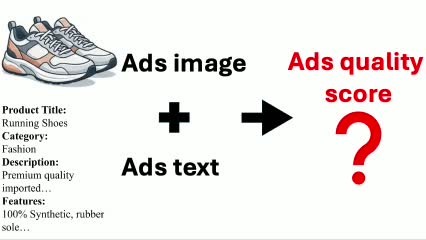
LoViF: Efficient VLMs for Multimodal Ad Creative Quality Scoring
Lead Organizer · First author of the challenge report
CVPR 2026 · LoViF [Challenge] [Workshop] [Report]
Benchmarking efficient VLMs for multimodal ad quality scoring.
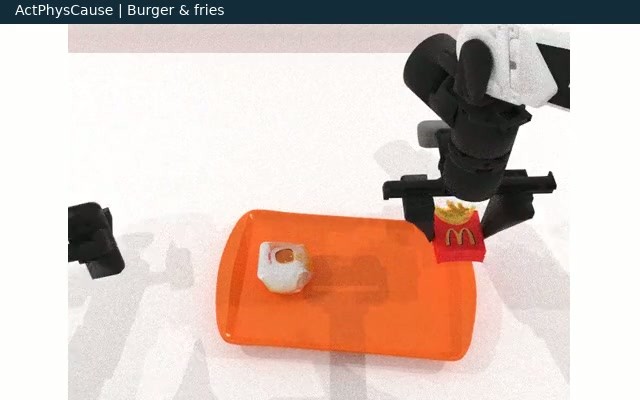
ActPhysCause: Action-Conditioned Physical and Causal World Modeling
Organizer · First author of the baseline report
ECCV 2026 · LoViF [Challenge] [Workshop] [Report]
Action-conditioned video generation for bimanual robot manipulation.
Talks & Presentations
- Spotlight presentation, NeurIPS 2026, Atlanta (upcoming) [Paper]
Self-Rewarded Multimodal Coherent Reasoning Across Diverse Visual Domains · Dec 2026 - Oral, ECCV 2026 LoViF Workshop, Malmö [Paper]
The LoViF 2026 ActPhysCause Challenge: A Baseline Report on Action-Conditioned Video World Models · Sep 2026 - Spotlight presentation, ICML 2026, Seoul [Paper]
Failure-Driven Workflow Refinement · Jul 2026 - Oral, CVPR 2026 LoViF Workshop, Denver [Paper]
The 1st LoViF Challenge on Efficient VLM for Multimodal Ad Creative Quality Scoring · Jun 2026 - Oral, AAAI 2026, Singapore [Paper]
RaCoT: Plug-and-play Contrastive Example Generation Mechanism for Enhanced LLM Reasoning Reliability · Jan 2026 - Oral, EMNLP 2025, Suzhou [Paper]
DrDiff: Dynamic Routing Diffusion with Hierarchical Attention · Nov 2025
Experience
Research

Visiting Researcher · Supervisors: Joseph C. Wu, Xuekun Wu
Exploring agentic AI for biological research and scientific discovery.
Jun 2026 – Present
Student Researcher · Mentors: Ming-Hsuan Yang, Liangzhe Yuan
Efficient video pretraining and vision-language models for high-frame-rate video understanding.
Mar 2026 – Present
Nanyang Technological University
Research Intern · Supervisors: Kwok-Yan Lam, Yongsen Zheng
Robust multi-agent systems under adversarial threats.
Dec 2025 – May 2026
Research Intern · Mentor: Rohan Maheshwari
Contributed to the Llama 4 project as part of the broader team.
Mar 2025 – Aug 2025
Research Collaborator · Mentor: Jian Wang
Controllable video generation with precise prompt-to-effect alignment.
Mar 2024 – Feb 2026
Sun Yat-sen University, HCP Lab
Lab Researcher · Supervisors: Keze Wang, Liang Lin
I am grateful to Prof. Keze Wang for giving me the opportunity to begin my research journey.
Jan 2024 – Dec 2025
Industry

Risk Control Algorithm Expert · Ant Shield
Developed core Ant Shield modules and a dynamic graph neural network pipeline for large-scale fraud and Sybil-attack detection.
2018 – 2023
Professional Service
Conference Reviewing
- 2026: ICLR, ICML, COLM, CVPR, ECCV, ACL (ARR), AAAI, AISTATS
- 2025: NeurIPS, ICLR, ICML, COLM, CVPR, ICCV, WACV, ACL (ARR), EMNLP (ARR), AAAI, AISTATS
- 2024: NeurIPS, ICML, CVPR, ECCV, ACM MM
- 2023: PRCV
Workshops & Challenges
- Lead Organizer, LoViF Challenge on Efficient VLMs at CVPR 2026
- Organizer, LoViF ActPhysCause Challenge at ECCV 2026
Selected Awards
Fellowships & Scholarships
- Snap Global AI Future Leader Scholarship, 2026 ($30,000)
- Snap Research Fellowship, 2025 (top 10 globally, $30,000)
Research & Reviewer Recognition
- Outstanding Reviewer, AAAI, 2026
- Outstanding Research Contribution Award, HCP Lab, Sun Yat-sen University, 2025
- Outstanding Reviewer, ICME and ICASSP, 2025